

STUDENT LIFE
Creative Arts
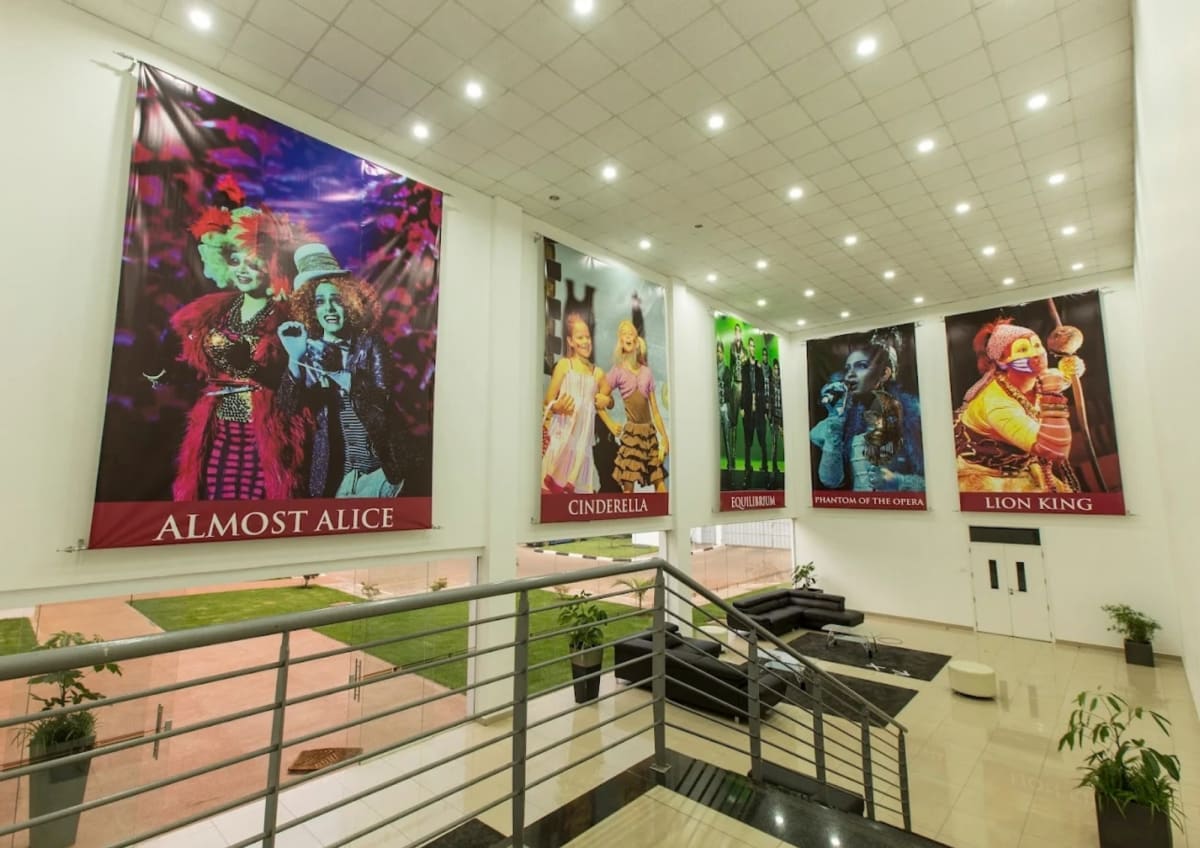
Studios, a performance hall and a stage — so art and drama are timetabled subjects, not a corner of a classroom.
A school production is a logistics problem before it is an artistic one
Most primary schools want to stage a play. What stops them is rarely talent — it is that the hall is also the dining room, the assembly space and the exam room, and the lighting rig does not exist.
Ours has a stage in it. That turns the school production from an annual scramble into something we can timetable and rehearse properly.
Three stages, one through-line
The arts are sequenced like any other subject here — each stage assumes what the last one taught.
- Early Years
Making a mark
Paint, clay, song and movement, every day. At this stage art is how a child learns to grip, to choose, and to say what they meant to make — the fine-motor and language work matters as much as the picture.
- Key Stage 1
Learning the craft
Colour mixing, rhythm and pitch, and the first proper performance in front of an audience that is not their own family. Confidence in front of a room is a skill, and it is taught.
- Key Stage 2
Working to an intention
Specialist teaching in a studio: painting technique, instrumental tuition, script and stagecraft. Children stop making what they can and start making what they planned.
Every child who wants a part will get one. There is no queue of year groups above them.
The founding cohort · 2026