
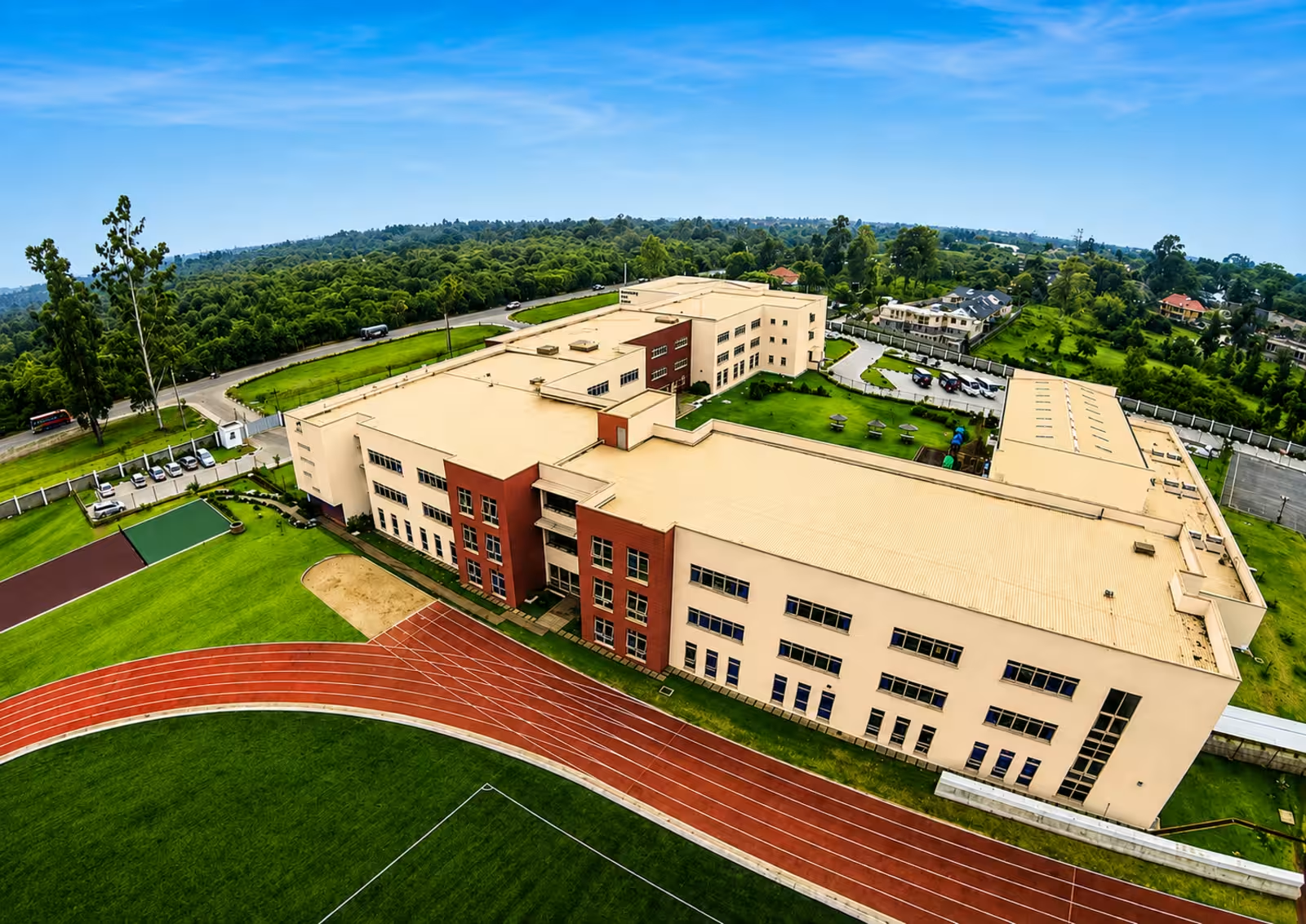

Karen is home to some of the most sought-after schools in East Africa. The green canopy, generous acreage, and fresh air provide an idyllic setting for childhood education. Yet because so many schools describe themselves as "child-centred," "world-class," and "holistic," distinguishing genuine substance from polished brochures can be difficult.
When touring preparatory and primary schools in Karen, these six practical checks will help you evaluate what your child will actually experience every Tuesday morning.
1. Ask for the Class Ceiling, Not the "Average"
Almost every school brochure quotes an average class size: "an average of 20 pupils."
An average is an arithmetic device that allows a school to place 34 pupils in Year 4 as long as there are 6 in a specialised nursery group.
Ask the admissions lead directly: "What is the maximum number of children allowed in this specific classroom before you close admissions?"
At Elyton, our answer is simple: twenty-five. That is a strict ceiling, not an average. When class twenty-five is enrolled in a year group, that year group is closed. In primary education, class size decides whether a teacher has time to hear every child read aloud each week, review every mathematics exercise book daily, and notice a quiet change in confidence before it becomes a learning obstacle.
2. Specialist Subject Teaching: Who Teaches What?
In early years, a dedicated generalist class teacher provides the emotional stability young children need. But as children progress into Key Stage 2 (Years 3 through 6, ages 7 to 11), academic depth demands specialist instruction.
Ask who teaches:
- Science: Is it taught by the general class teacher out of a workbook, or by a science specialist in a dedicated laboratory with functioning sinks, safety equipment, and experiment benches?
- Computing & Digital Literacy: Are children simply playing games on tablets, or learning computational thinking, algorithms, and keyboarding in a structured ICT environment?
- Music and Drama: Is there dedicated instrumental instruction and a real stage for performances?
- Physical Education: Are coaches qualified in youth athletics, swimming, and team sports?
Specialist teaching prepares preparatory pupils for the independence and departmental structure of secondary school.
3. Facility Access Per Child
Karen schools are famous for extensive grounds, but existence is not the same as access.
A campus with an Olympic-sized pitch and 900 pupils may allocate twenty minutes of pitch time per year group per week.
Examine the pupil-to-facility ratio:
- How often will your child use the running track, the sports field, or the swimming pool?
- Are facilities shared across multiple age groups simultaneously?
At Elyton's campus on Magadi Road, our 400-metre all-weather athletics track and sports fields were completed before our first cohort was admitted. For our founding cohort, access is unrationed: our first families enjoy the facilities of a mature campus with the personal attention of an intimate founding community.
4. The Commute and Morning Energy
A child who spends ninety minutes in gridlock on Lang'ata Road or Ngong Road arrives at school fatigued before the first lesson begins.
When choosing a school in Karen, evaluate the physical logistics:
- Where does the school sit relative to your home or daily commute?
- Does the campus have safe, off-street drop-off zones, or does morning drop-off create a quarter-mile queue?
- Are school transport routes dedicated, supervised, and direct?
Elyton's location on Magadi Road provides straightforward access for families living in Karen, Lang'ata, Hardy, and surrounding areas, keeping transit times short and morning drop-offs seamless.
5. Outdoor Learning and Physical Culture
Children learn with their bodies as much as their minds. Preparatory education should cultivate physical literacy: coordination, stamina, sportsmanship, and joy in movement.
Look closely at the outdoor environment:
- Is physical activity restricted to a small tarmac playground, or is there grass, shade, and space to run?
- Does sport continue through Nairobi's long rains? An all-weather track ensures athletics and games remain part of the weekly routine year-round.
- Is physical education treated as an integral academic subject with structured skill development, or merely as free play?
6. Transparency of School Leadership
The final check is the most revealing: how does school leadership answer direct questions?
Ask:
- "What is your staff turnover rate?"
- "What happens when a child falls behind in reading by term two?"
- "Can you give me the complete fee schedule in writing today, including transport, meals, and activities?"
Schools that operate with clarity and confidence will welcome these questions.
Come and test us against these six checks. Book a private weekday tour at Elyton International School, walk our learning wings, inspect our track, and meet our admissions leadership in person.